A Sugar Land system runs for roughly seven months and sits for five, and the day it is asked to switch over is the day it most often quits. Say what it is doing — or just how old it is — and get connected with an independent, TDLR-licensed air conditioning contractor working in Fort Bend County.
Sugar Land AC Repairs is a referral service. It does not perform, and does not offer to perform, air conditioning or heating work. Every job is carried out by an independent contractor licensed by the Texas Department of Licensing and Regulation under their own company name and their own license number.
AC repair · Replacement and changeouts · Attic air handlers and drain lines · Heating and furnace · Sugar Land and Fort Bend County
Warm air at the vents, a breaker that keeps tripping, a ceiling stain under the attic unit, or just a 2007 Telfair house on its original system. All four are worth the call.
An independent air conditioning and refrigeration contractor licensed by TDLR and working in Fort Bend County — not a dispatcher three states away.
What failed, what it costs to repair, what a changeout would cost instead, and what refrigerant the system uses. On paper, from the contractor, before anything is ordered.
In July the queue is the constraint. In October it is not — which is the argument for having the heating side looked at before the first cold night, not after it.
The blower runs and the air moves, but nothing at the vent is cool. Usually a refrigerant-circuit or compressor question rather than an airflow one. AC repair.
No hum outside, no air inside, and a house that gains a degree an hour. Emergency AC repair.
In a slab-on-grade house the air handler is above that ceiling. A clogged condensate drain announces itself as a stain, not as a noise. Attic air handlers and drain lines.
Long cycles that never satisfy the thermostat point at capacity, duct losses or a fouled coil rather than a dead part. Duct repair and sealing.
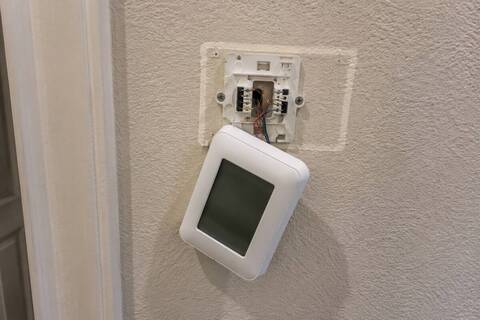
An oversized system cools the air quickly and then stops before it has pulled any moisture out. That is a comfort problem the thermostat cannot fix. Thermostats and controls.
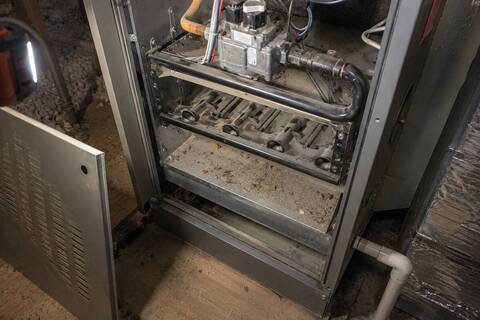
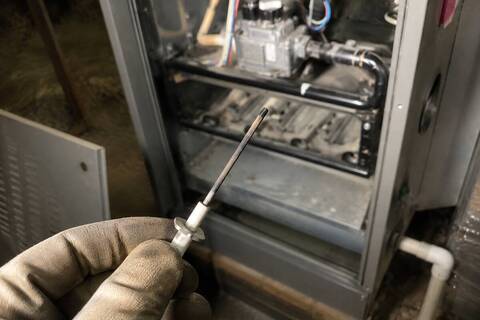
The classic Houston failure: seven months idle, then asked for full output at once. Ignition assemblies are the usual casualty. Heating and furnace repair.
Fort Bend sits in Climate Zone 2A, hot-humid. Eighty-nine days a year at or above 90°F is why national lifespan figures do not travel here.
The repair-or-replace page. Houston averages around $7,500 for a 2,000 sq ft home, and a central system's 10–15 year life expectancy is shorter under this runtime.
What actually counts as an emergency in a Houston August, what an after-hours call costs, and what to do in the hours before someone arrives.
No basement, no crawl space — so the air handler sits above a finished ceiling. The pan, the secondary line and the float switch are the whole story.
961 heating degree days against 4,099 cooling. Lightly used is exactly why it fails on the first cold night.
A no-heat call on a fifteen-year-old shared air handler in November is a changeout conversation, and a calmer one than July.
Increasingly common in Gulf Coast new build. How it differs from a furnace-plus-AC pairing, and why it feels different in January.
R-22, R-410A and the A2L changeover — including the 2026 EPA reversal that most published content has not caught up with.
Ducts in an unconditioned attic are the regional norm and a documented efficiency penalty. Leakage is cooling paid for and never delivered.
The April cooling check and the October heating check. One of the two is genuinely rare in Houston, and it is the one with a carbon monoxide angle.
Gulf humidity load, filtration and dehumidification — the reason a house at 74°F can still feel wrong.
Smart controls, zoning, and why oversizing shows up as short cycling rather than as a bigger power bill.
Fort Bend County is IECC and ASHRAE Climate Zone 2A, hot-humid. The average first 90°F day is 6 May and the average last is 8 October; the county sees roughly 89 days a year at or above 90°F and 27 at or above 95°F. Houston logged 4,099 cooling degree days in 2025 against 961 heating. A condenser here accumulates far more compressor hours per calendar year than the identical unit in a four-season market, which is why a national "10 to 15 years" figure lands at the short end locally.
The same equipment provides heat, and the heating side sits unused from roughly March to November. Dust settles, seals stiffen, thermostat calibration drifts and ignition assemblies degrade. The trade rule of thumb is that a furnace fails on the first cold night after sitting idle all summer — which is why October, not January, is the useful month to have the heating side looked at.
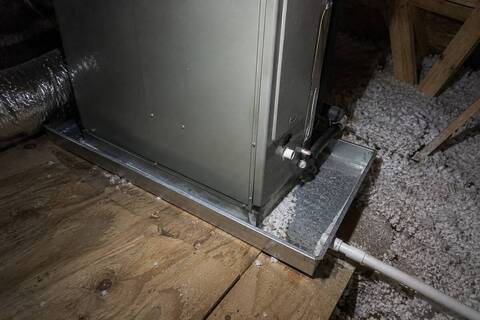
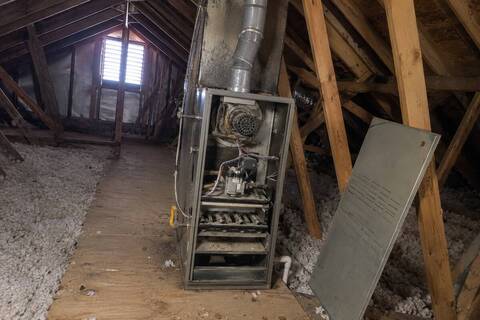
Sugar Land houses are slab-on-grade. There is no basement and no crawl space, so the air handler goes in the attic, directly over finished rooms. The IRC requires secondary drain protection where an overflow would damage the building — an auxiliary pan with its own drain, a secondary line discharging somewhere conspicuous, or a float switch. That drip over the front window is the system telling you the primary drain has clogged. When none of those work, the first sign is a stain on a bedroom ceiling. Rusted-through emergency pans in 1980s and 1990s First Colony attics are a routine finding.
Systems manufactured on or after January 1, 2025 use lower-GWP refrigerant — R-454B or R-32. The original rule barred installing pre-2025 R-410A stock after January 1, 2026, and the EPA reversed that: a final rule published May 26, 2026, effective July 27, 2026, allows R-410A units built before 2025 to be installed until supplies run out. New York wrote the original deadline into state law; Texas did not. So R-410A equipment is not stranded, and any quote that says otherwise is out of date. The full picture is here.
Light commercial is a different machine and a different buyer. Rooftop package units rather than split systems, a property manager on a service agreement rather than a homeowner with an emergency, and downtime that costs a tenant money rather than comfort. That covers the retail strip on US 59, the medical offices clustered near First Colony, and the light industrial units out in the Sugar Land Business Park.
See commercial AC and HVAC →On an air conditioning site the age of the house is a good proxy for the age of the system, so the service-area pages run oldest to newest — Venetian Estates in the late 1950s through Riverstone in 2020, each on a different point of the replacement clock.
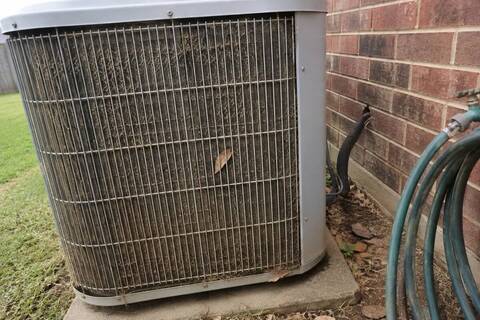
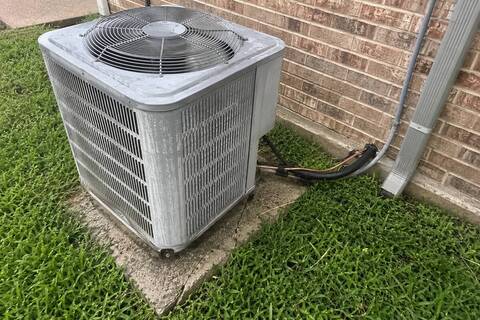
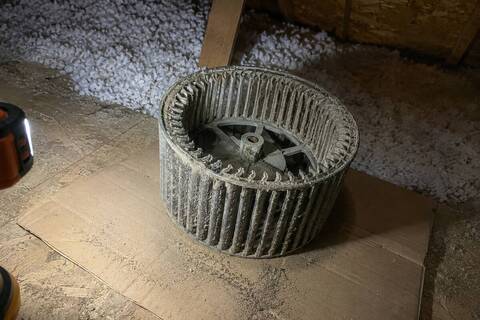
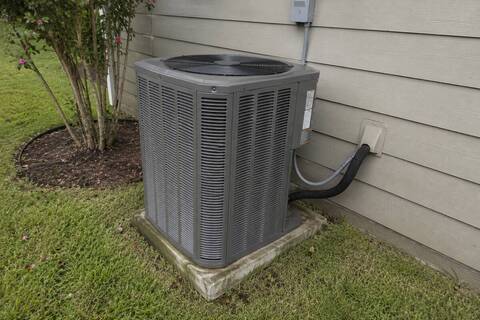
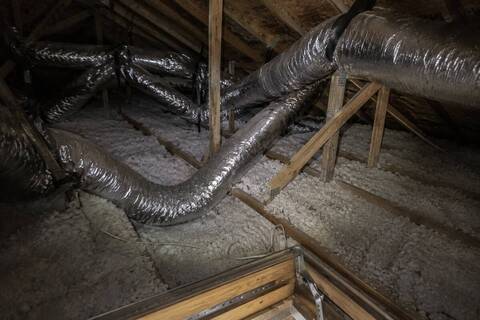
The national life expectancy for central air conditioning is 10 to 15 years, and Sugar Land sits at the short end of it. The reason is runtime rather than build quality: 89 days a year at or above 90°F and a cooling season running from early May to early October put far more compressor hours on a unit here than the same unit would see in Denver or Chicago. A 2007 house in Telfair on its original system is not unlucky; it is on schedule. See AC replacement and installation.
No. R-410A equipment is not stranded and the EPA's 2026 rule change made that clearer, not less clear: a final rule published May 26, 2026 and effective July 27, 2026 permits installation of R-410A units manufactured before January 1, 2025 until existing supplies run out, and Texas has not codified any earlier state deadline. R-22 is a different case — production has ended and service depends on reclaimed stock, so a refrigerant-circuit failure on an R-22 system is usually a replacement conversation. Even there, no federal rule requires anyone to replace a working unit. See refrigerant and system age.
Almost always a condensate problem rather than a roof leak. The air handler in a slab-on-grade house sits in the attic above finished rooms and produces several gallons of water a day through a Gulf Coast summer. When the primary drain line clogs, the water goes into the auxiliary pan; when the pan has rusted through, or the secondary line is blocked, or the float switch was never installed, it goes into the ceiling. A drip over an exterior window is the designed warning that this has started. See attic air handlers and drain lines.
Yes. Air conditioning and refrigeration contracting is licensed by the Texas Department of Licensing and Regulation, and Occupations Code §1302.251 bars anyone from performing or offering to perform it without a license. A contractor's TACL number belongs to their company, so the right question is not "are you licensed" in the abstract but "what is the company's TACL number, and is your name on it." That matters more with the new A2L refrigerants, which are mildly flammable and change how a system is handled in an attic. This site is a referral service and holds no TDLR license — it is not lawful for it to display one.
In a slab-on-grade house the attic carries the air handler, the ductwork and the second-floor water supply, so a wet ceiling has more than one plausible cause. If the AC turns out not to be the source, these Fort Bend County trades cover the alternatives:
Supply lines to upstairs bathrooms run through the same attic as the air handler. A ceiling stain in Sugar Land is a condensate problem or a supply-line problem about as often either way.
What a slow drain-pan overflow becomes while nobody is home: saturated blown-in insulation, ceiling board and drywall. Stopping the water and drying the structure out are two separate jobs.
The roof is the third explanation for that ceiling, and the source of the soffit and fascia gaps that let rodents into the burner compartment and the duct runs in the first place.
Give us the year the house was built, the age of the system if you know it, and what it is doing. Getting connected with a licensed Fort Bend County contractor takes one call.
Call (281) 672-8034 Request a Quote Sugar Land