Home › Services › Heat Pump Systems
A heat pump is one machine doing both jobs: it moves heat out of the house in summer and back into it in winter. In a climate with 4,099 cooling degree days and 961 heating, that is a much better fit than the national conversation about heat pumps usually assumes.
A conventional Sugar Land system is two machines sharing an air handler and ductwork: an air conditioner that moves heat out, and a gas furnace that makes heat by burning something. A heat pump replaces the second half. It is the same refrigerant cycle as the air conditioning, run in reverse, so the heating side uses the equipment that is already there rather than a separate combustion appliance.
Three practical consequences follow. There is no combustion, so no flue, no combustion air requirement and no heat exchanger — which removes the carbon monoxide risk described on the furnace repair page entirely. The supply air is cooler than gas heat, delivered in greater volume, which surprises people moving from a furnace. And the heating side is exercised by the cooling season, because it is the same compressor, so it does not sit idle for seven months the way a furnace does.
A heat pump moves more air for the same heating output. Undersized, leaky or crushed duct runs in an unconditioned attic show up faster on a heat pump than on a furnace. See duct repair and sealing.
All-electric heating draws more from the panel, and older Sugar Land houses may be on 100 to 150 amp service that was sized for a different set of appliances. That is an electrician question before it is an HVAC one.
Most installations include electric resistance backup for the coldest nights and for defrost cycles. How and when it engages is a control question worth asking about, because it is the expensive way to make heat.
Frost on the outdoor coil in cool, humid weather is normal and the system clears it by briefly reversing. Steam off the unit in January is a defrost cycle, not a failure.
New heat pumps use the A2L refrigerants R-454B or R-32, which are mildly flammable and change attic handling and leak-detection practice. See refrigerant and system age.
A heat pump in an attic drains condensate exactly as an air conditioner does, and produces some in heating mode too. Pan, secondary line and float switch all still apply.
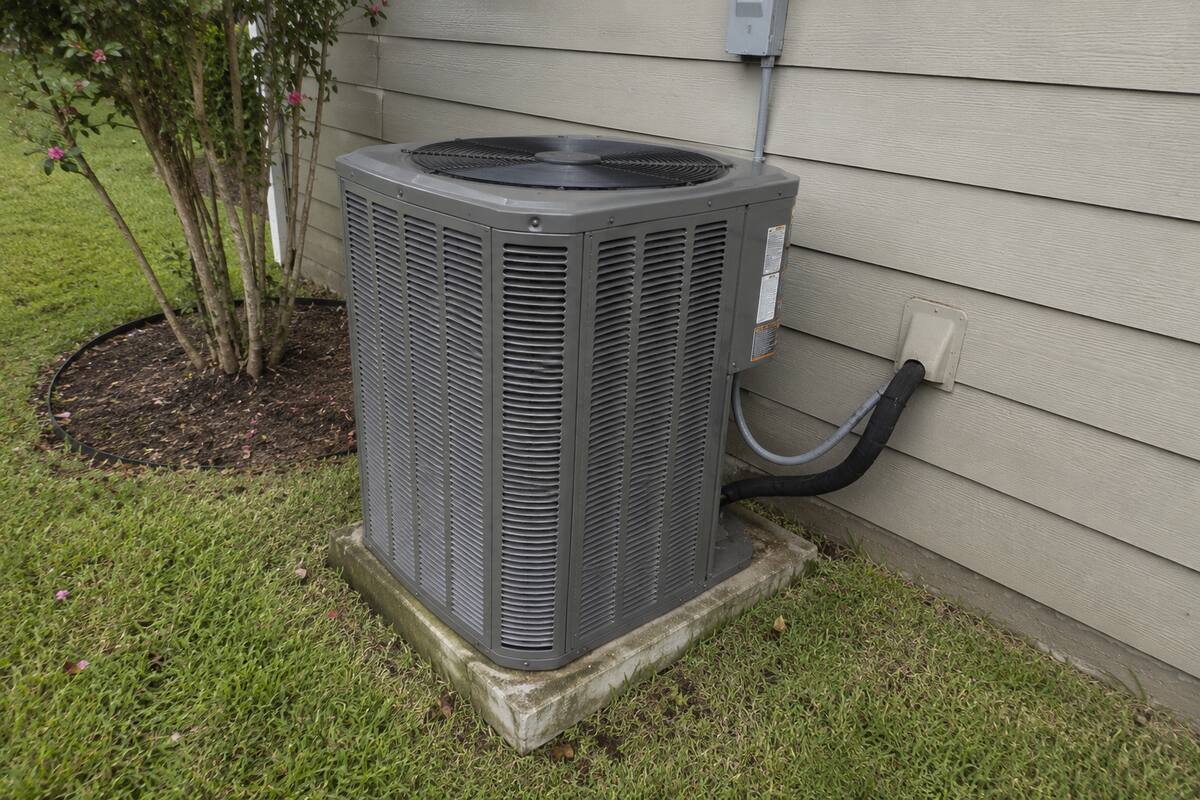
Heat pumps are most common in the newer end of the city — the 2000s and 2010s phases of Telfair, Riverstone and Sienna, and in all-electric houses where no gas run was ever installed. They are also a reasonable retrofit answer in older houses where getting a gas line and a flue to an attic furnace is awkward, provided the ductwork and the electrical service are up to it.
The other thing worth saying plainly: on a house that already has a serviceable gas furnace and a failed air conditioner, replacing the cooling side with a heat pump is not automatically the cheaper route, and a dual-fuel arrangement introduces control complexity that has to be set up properly to be worth having.
This is the climate it works best in. A heat pump loses efficiency as outdoor temperatures fall, and Houston spends very little of the year at the temperatures where that becomes a problem — 961 heating degree days in 2025 against 4,099 cooling. The Gulf Coast is close to the ideal case rather than the marginal one.
Because it is. A heat pump delivers a large volume of moderately warm air rather than a small volume of hot air, so a supply register that feels lukewarm to a hand can still be heating the house perfectly well. It is the most common complaint from someone moving from gas heat, and it is a perception difference rather than a fault.
A defrost cycle. In cool, humid conditions frost forms on the outdoor coil, and the system briefly reverses to melt it — which produces steam, a change in sound, and a short period where the indoor air goes cool. It is normal and it is supposed to end after a few minutes. What is not normal is running in defrost repeatedly or sitting frosted over for an hour.
It depends more on the ductwork and the electrical service than on the house itself. A heat pump moves more air than a gas furnace of comparable output, so undersized or leaky ducts show up quickly. In houses old enough to have had the system retrofitted — Venetian Estates, Sugar Creek, Sugar Mill — the duct system is usually the deciding factor, and it should be assessed before the equipment is chosen.
The right answer depends on the ductwork, the panel and the gas run, not on the brochure. Get connected with an independent Fort Bend County contractor who will look at all three.
Call (281) 672-8034 Request a Quote Sugar Land