Home › Services › Maintenance & Tune-Ups
Two visits a year, and they are not the same visit. The April cooling check is routine and widely sold. The October heating check is rare in Houston, and it is the one that can find something that matters more than comfort.
A Houston furnace sits unused for roughly seven to eight months. Everything that goes wrong during that period is invisible while it is going wrong. Dust settles on the flame sensor. The igniter corrodes. A rodent finds the burner compartment or the flue. Gaskets stiffen. And the heat exchanger — the metal barrier between combustion gases and the air blown through the house — can develop a crack that cannot be detected by a homeowner, from a photograph, or from how the house feels.
None of that is discoverable until the system is put into heat mode and watched by someone qualified. A cracked heat exchanger is a carbon monoxide risk, and it is the single strongest reason on this site to have a system looked at when nothing appears to be wrong. Independently: working carbon monoxide alarms on every sleeping level of any house with gas appliances, tested, not assumed.
The commercial detail worth knowing as a homeowner: October and November are the least contested weeks in the Houston HVAC calendar. Every marketing budget in the metro is spent by September. A check that takes three weeks to schedule in July takes days in October.
Condenser coil cleaned, charge verified against the manufacturer figure, capacitors and contactors tested under load, blower and filter checked, temperature split confirmed. Fort Bend averages its first 90°F day on 6 May; the point is to be ahead of that.
A wet PVC line in a warm attic grows a biological slime that closes it. Clearing it annually is the cheapest ceiling insurance available in this city. See attic air handlers and drain lines.
Burner compartment and flue inspected, flame sensor cleaned, igniter tested, heat exchanger examined, safety interlocks confirmed, and the system actually run in heat mode. This is the visit that finds what the idle season did.
Change the filter on a schedule, keep two feet clear around the outdoor unit, keep grass clippings off the condenser fins, and glance at the secondary drain outlet after a hot week.
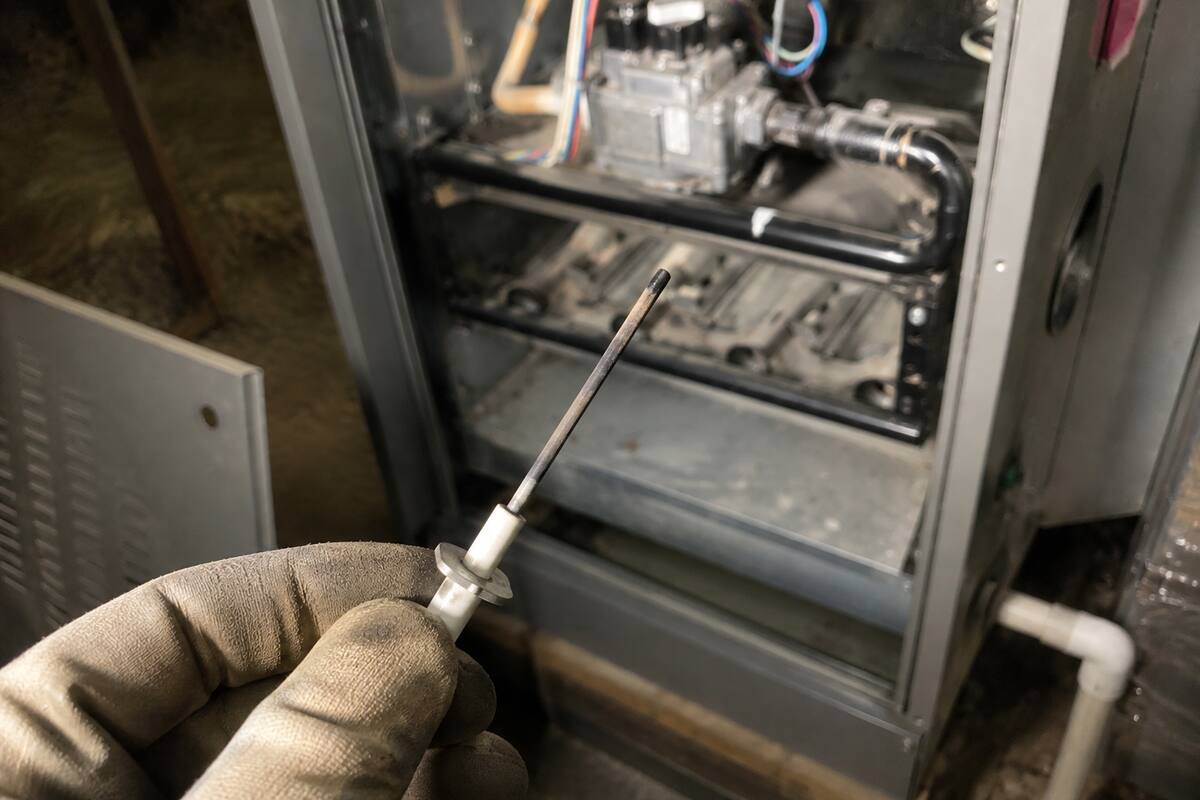
Three of the most expensive failures in this market are preceded by months of warning that nobody was looking for. A condensate line closes gradually over one or two seasons before it puts water through a ceiling. A condenser coil fouls slowly before it costs a compressor on the hottest afternoon of the year. A flame sensor accumulates residue all summer before it produces a no-heat call on the coldest night. In each case the intervention is inexpensive and the failure is not.
That is the honest case for maintenance, and it is deliberately not a promise about extending equipment life indefinitely. A Sugar Land system will still reach the end of its 10-to-15-year window — sooner than the national figure suggests, because of the runtime. What maintenance changes is whether it gets there without taking a ceiling or a compressor with it, and whether the replacement happens on a planned October timetable or on an emergency August one.
Cleaning the condenser coil, checking refrigerant charge against the manufacturer figure rather than by feel, testing capacitors and contactors under load, clearing and testing the condensate drain and float switch, checking the blower wheel and filter, and confirming the temperature split across the evaporator coil. The two items with the best return in this market are the coil and the condensate line, because both fail silently.
The heating check exists to find things that are invisible until the system runs in heat mode: a cracked heat exchanger, a caked flame sensor, a corroded igniter, a rodent nest in the burner compartment or flue, a pressure switch that will not close. None of those can be assessed by a homeowner or from a photograph. That is the whole argument for the appointment.
Sometimes, and the terms matter more than the headline price. Read what the plan actually includes, how many visits, whether a diagnostic fee is waived, what the parts discount is, whether priority scheduling in a heat wave is genuinely committed to or merely mentioned, and whether it auto-renews. A plan that only ever produces one visit is a cooling check with a subscription attached.
Cooling in March or April, before the first sustained 90-degree stretch, which in Fort Bend County averages a 6 May start. Heating in October, before the first cold night, which typically lands between late October and late November. Booking the heating check in October is also the easiest appointment of the year to get, because almost nobody in Houston asks for one.
It is the easiest appointment of the year to get and the one most likely to find something. Get connected with an independent Fort Bend County contractor.
Call (281) 672-8034 Request an Appointment Sugar Land