Home › Services › Indoor Air Quality
A Gulf Coast summer puts a heavy latent load on every system in Fort Bend County. That is why a Sugar Land house can sit at the setpoint and still feel wrong — and why the fix is usually run time rather than a colder thermostat.
An air conditioner does two jobs at once: it lowers the temperature of the air, and it condenses moisture out of it. The first is what the thermostat measures. The second is what makes a house feel comfortable in a climate classified hot-humid, Climate Zone 2A.
Moisture removal happens only while the system is running and the coil is cold and wet. A short cycle removes very little. So a house can hold 74°F on the display and still feel clammy, and the instinctive response — set it to 71 — makes the cycles shorter still. The underlying question is almost always how long does the system run, and that is a sizing, duct and control question rather than an air-quality product question.
An oversized system is the most common cause of a cool, damp house. Correct sizing comes from a load calculation on the actual house. See thermostats and controls.
A leaking return continuously pulls hot, humid attic air into the system, so the latent load never falls no matter how long the equipment runs. See duct repair and sealing.
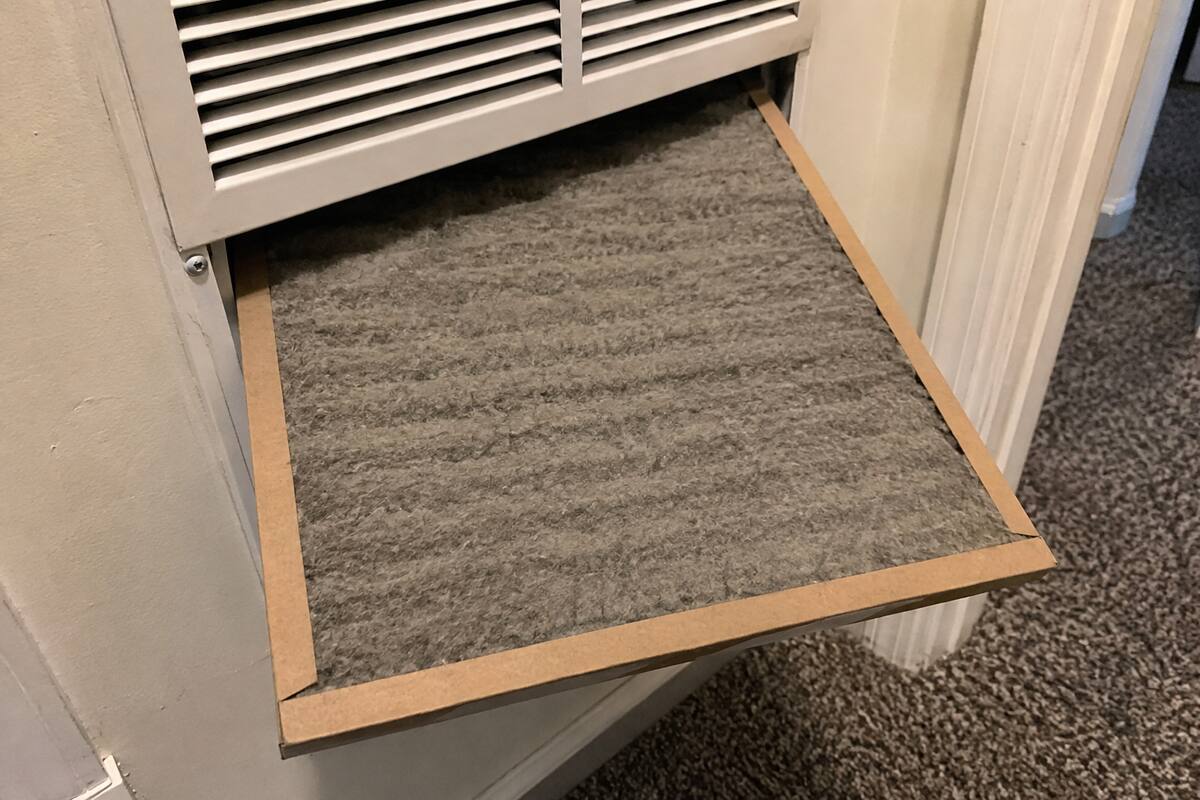
A denser filter is not automatically a better one. Airflow the system can actually sustain matters more than the MERV number on the box.
A coil that is wet for five months a year in a warm attic is a place biological growth happens. It is also the source of the musty smell people attribute to the ducts. See attic air handlers and drain lines.
Where run time cannot be extended enough, a whole-house dehumidifier addresses the latent load directly rather than by proxy. It is a real answer, not a gadget - but it is the second answer, after sizing and ducts.
Bathroom and kitchen exhaust that actually vents outside rather than into the attic. Common enough to be worth checking, and cheap to fix when it is wrong.
In the tighter, better-sealed construction of Telfair, Riverstone and Avalon, the usual complaint is a house that holds temperature well but feels stuffy — a ventilation and latent-load question. In Venetian Estates, Sugar Creek and Covington Woods, where the envelope is leakier and the system may have been retrofitted into a house not designed around ducted air, the problem is more often infiltration: outside air finding its way in faster than the equipment can dry it. Same symptom, opposite causes, and the diagnosis is worth getting right before anything is bought.
Because temperature and humidity are separate measurements and a thermostat only reads one of them. Comfort in a Gulf Coast summer depends heavily on the second. A system that reaches 74°F quickly and shuts off has not run long enough to condense much moisture, so the air is cool and wet at the same time. Short run times are the usual cause, and oversizing is the usual cause of short run times.
No, and a much denser filter can make things slightly worse by restricting airflow. Filtration and dehumidification are different jobs. A high-MERV filter in a duct system designed for a cheap one reduces the air moving across the coil, which shortens the effective run and reduces moisture removal. Filter choice should match what the system can actually pull through it.
Occasionally, and less often than it is sold. It has a clear case after construction or remodeling work, after rodent activity in the attic, or where there is visible contamination inside the runs. As a routine annual service on a well-sealed system it is not where the money goes furthest - sealing the ducts and clearing the condensate line both do more.
Claims in this category run well ahead of the evidence, and the honest answer is that it depends on the specific problem you are trying to solve. Coil-mounted UV is aimed at biological growth on a wet evaporator coil, which is a real phenomenon in this climate. Whole-house filtration and ventilation address different things again. Anyone recommending a package without first asking what symptom you are actually experiencing is selling equipment rather than solving a problem.
That combination has a small number of specific causes and none of them is the thermostat setting. Get connected with an independent Fort Bend County contractor.
Call (281) 672-8034 Request a Quote Sugar Land